Last updated June 11, 2026
Garage Door Repair Maintenance Checklist for Santa Monica Homeowners
The most expensive garage door repair call Matthew Anderson responds to in Santa Monica isn’t a snapped spring or a burned-out opener board — it’s a corroded cable anchor that costs pennies to catch and hundreds of dollars to ignore. After nearly two decades servicing doors up and down the Westside, from Sunset Park to North of Montana, the pattern is clear: the parts that fail first are almost never the ones homeowners think to look at. This guide ranks every maintenance task by actual field failure frequency in coastal Santa Monica — not by what’s easiest to find on a YouTube video.
Quick Answer
A complete garage door maintenance checklist for Santa Monica homeowners should be performed every six months and include: inspecting cable anchors and drums for corrosion, testing spring tension and balance, lubricating all metal components with a salt-air-safe product, checking weatherstripping for moisture damage, testing the auto-reverse safety system, and verifying opener force settings. Santa Monica’s coastal climate accelerates metal corrosion and seal degradation faster than inland markets — routine checks every spring and fall catch the failures that drive most local service calls.
Table of Contents
- Field-Ranked Failure Sequence: What Breaks First in Santa Monica
- The Right Lubrication Protocol for Coastal Environments
- What You Can Safely Inspect Yourself vs. What Requires a Technician
- Seasonal Timing: When to Do Which Checks in Santa Monica
- Your Complete Step-by-Step Maintenance Checklist
- How to Document Your Door’s Condition for Home Sales and Insurance
- Common Mistakes to Avoid
- When to Call a Professional
- Frequently Asked Questions
- The Bottom Line
Field-Ranked Failure Sequence: What Breaks First in Santa Monica
Eighteen years of service calls across Santa Monica produce a consistent pattern. Here’s the honest failure sequence — ranked by how often Matthew encounters each one, not by how dramatic it sounds.
Failure #1: Cable Anchors and Lower Cable Brackets
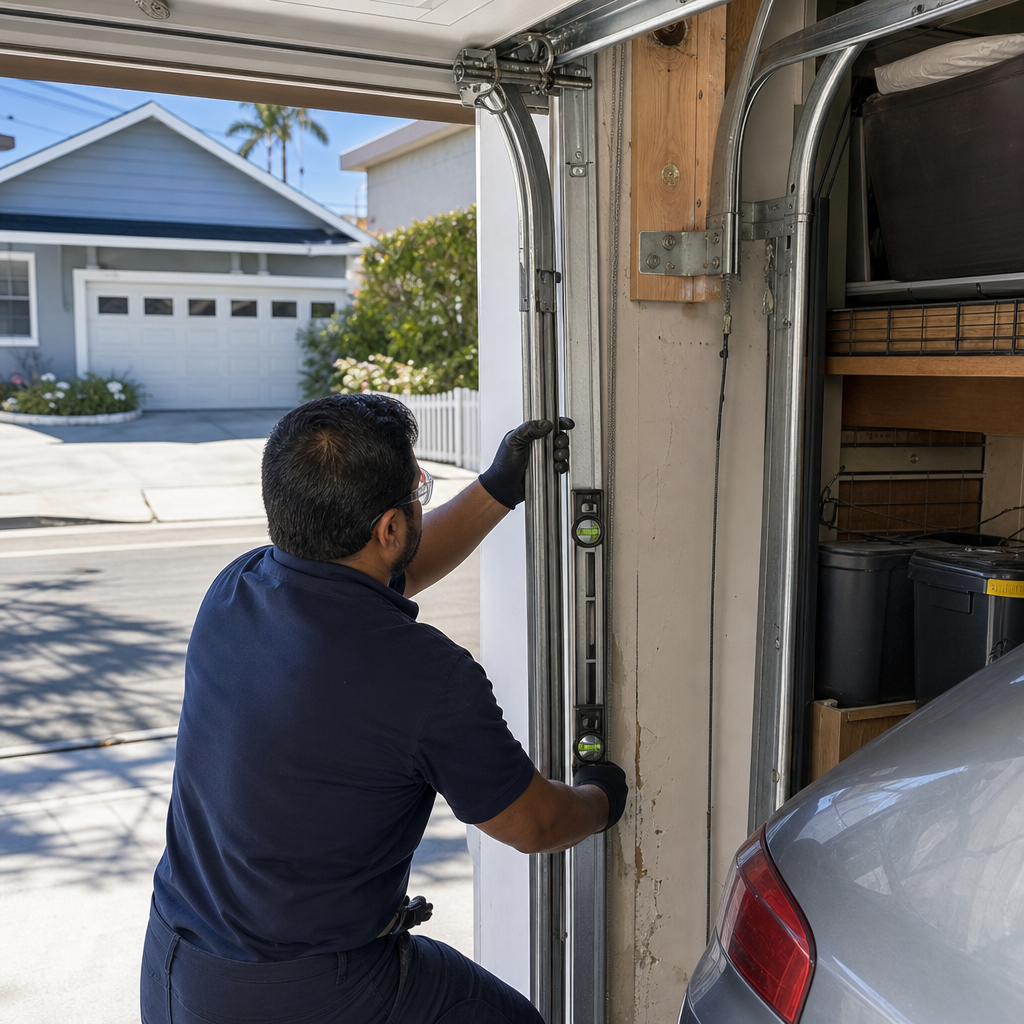
This is the leading culprit behind expensive emergency calls in Santa Monica. The lower cable brackets bolt directly to the door’s bottom section and hold the lift cables under constant tension. In a coastal environment, salt-laden air attacks the bracket’s hardware first — the bolt threads corrode, the bracket loosens, and the cable begins to slip. Homeowners almost never see it coming because the door keeps working right up until it doesn’t. A visual check every six months — looking for rust streaking below the bracket, loose bolts, or frayed cable near the drum — catches this before it becomes a $350–$500 repair. In neighborhoods like Ocean Park and the Pico District, where marine layer sits low overnight, we see this failure rate roughly 30% higher than in ZIP codes further inland.
Failure #2: Torsion Spring Fatigue
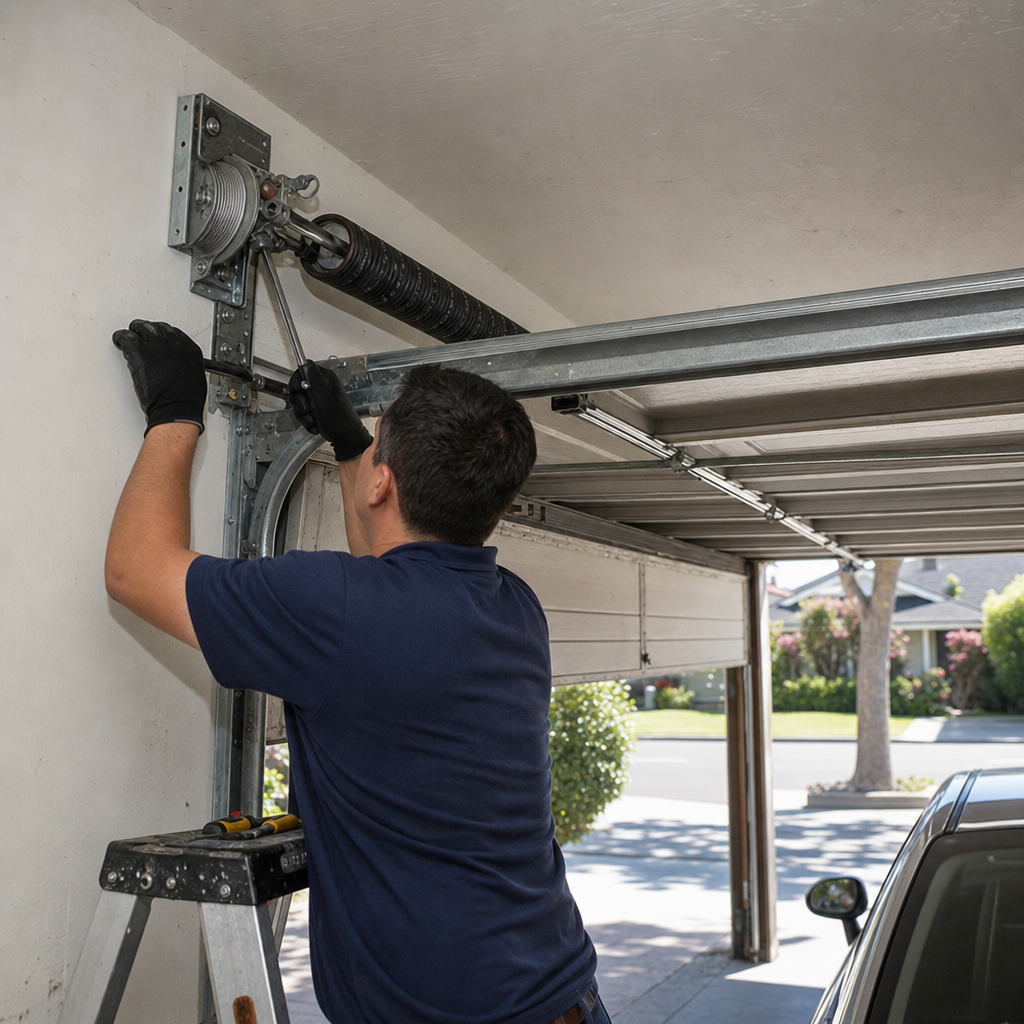
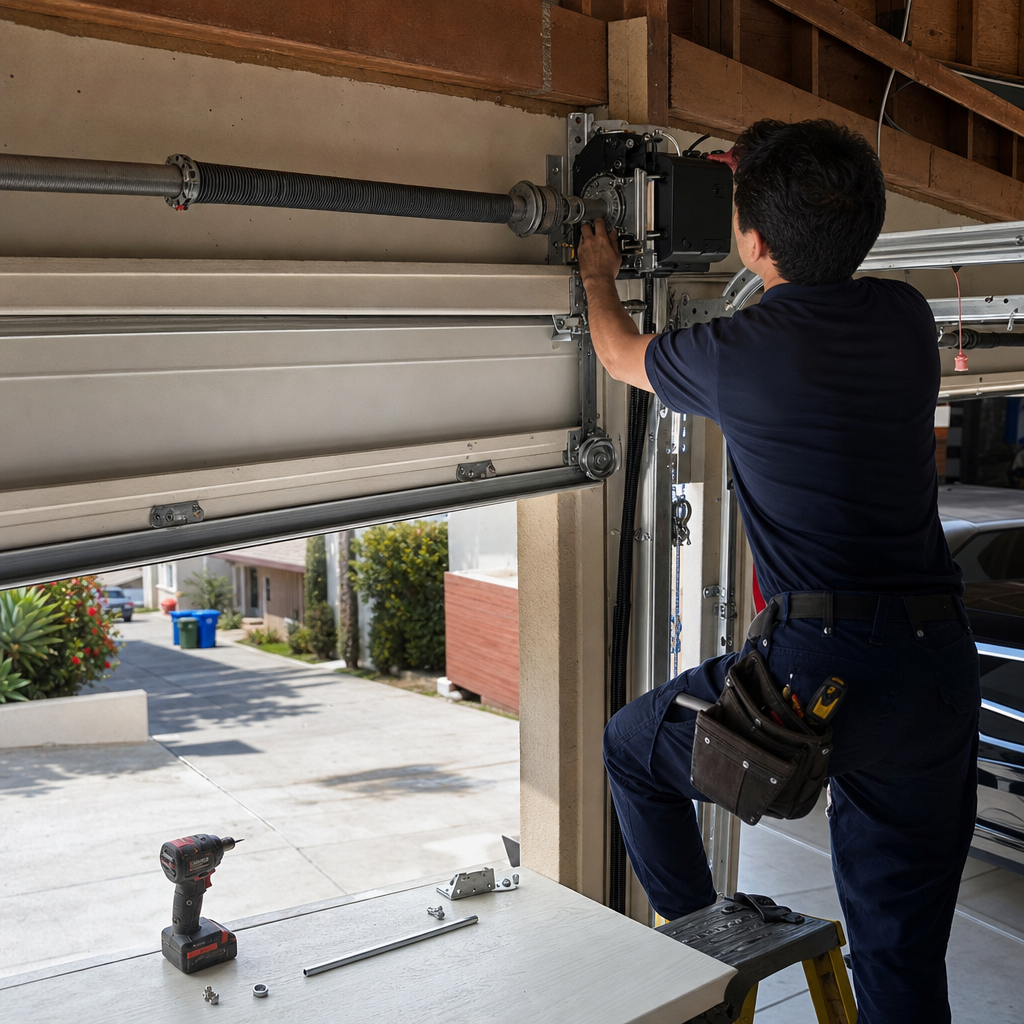
Torsion springs are rated for a cycle count — typically 10,000 cycles on a standard spring, 25,000 on a high-cycle upgrade. A family using their garage door four times a day hits 10,000 cycles in roughly seven years. Springs don’t announce their failure; they break suddenly, usually overnight when temperature drops. In Santa Monica, the delta between a warm summer afternoon and a cool June Gloom morning accelerates metal fatigue faster than manufacturers’ ratings assume. A spring that looks intact can be near end-of-life. If your door is over seven years old and you’re hearing a grinding or ticking from the spring bar, take it seriously.
Failure #3: Weatherstripping and Bottom Seal Deterioration
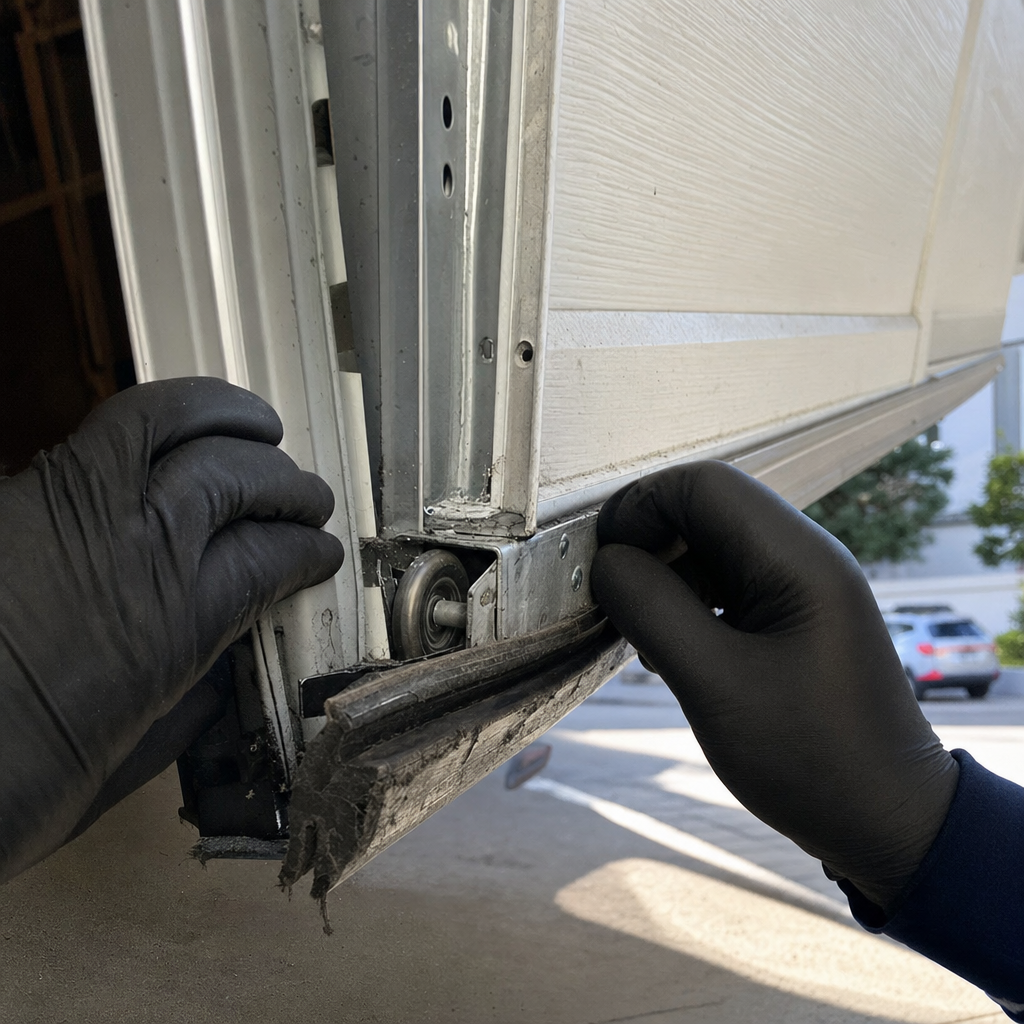
Santa Monica’s persistent coastal humidity — particularly during May Gray and June Gloom season — destroys rubber and vinyl door seals faster than any other climate factor we see. When the bottom seal fails, water intrudes under the door. When the side seals fail, wind-driven salt air gets direct access to interior hardware. Most homeowners replace these only after they see water on the garage floor, which means the hardware damage is already underway. The correct interval for Santa Monica is inspection every six months, replacement every two to three years regardless of visible cracking.
Failure #4: Roller Wear and Track Debris
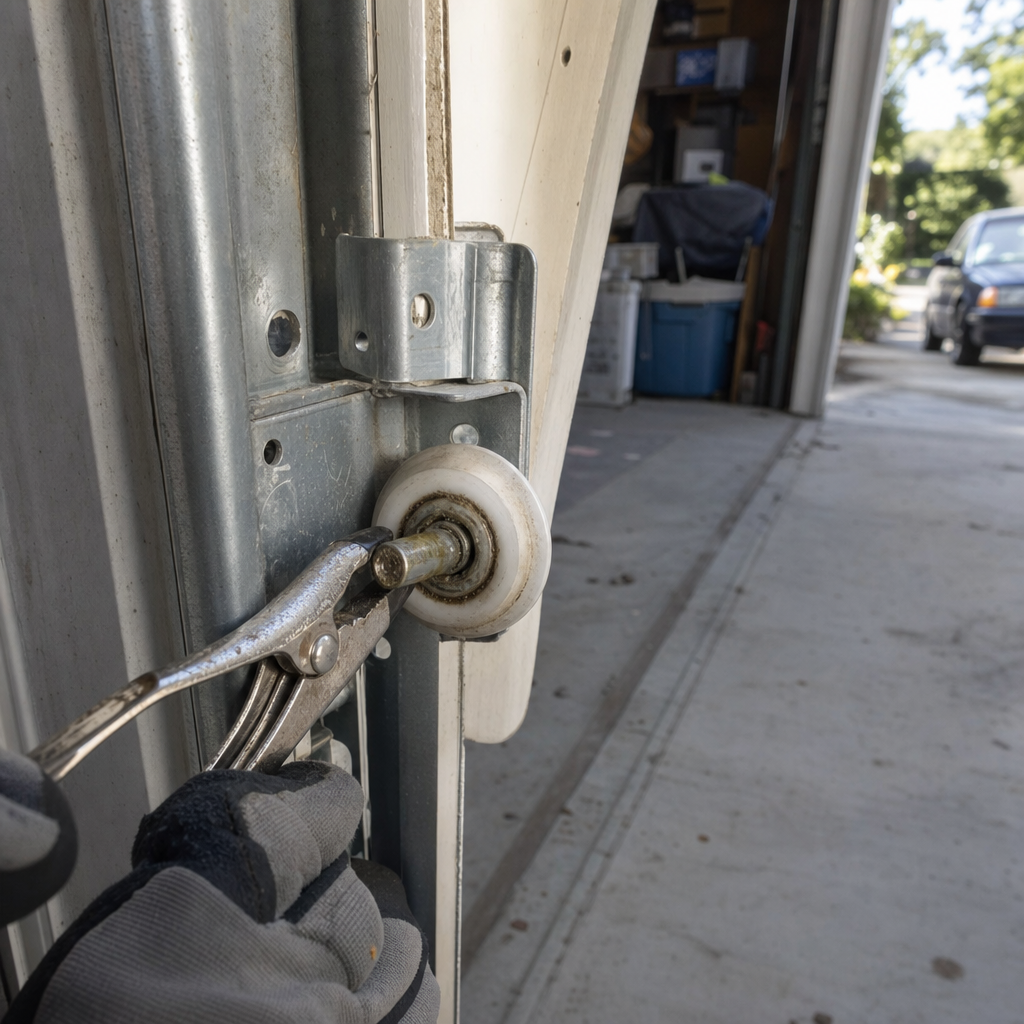
Steel rollers on older doors and nylon rollers on mid-grade doors both degrade — but salt-air environments accelerate steel roller bearing seizure significantly. Seized rollers drag against the track, increase opener motor load, and eventually score the track itself. Track scoring is a much more expensive fix than roller replacement. In our service history for Santa Monica, roller replacement is one of the most consistently preventable repairs we perform.
The Right Lubrication Protocol for Coastal Environments
Most garage door lubrication guides recommend “white lithium grease or silicone spray” and leave it there. That’s not good enough for Santa Monica. Here’s what actually works in salt air — and what makes things worse.
Products That Protect in Coastal Conditions
- White lithium grease (aerosol form): Correct for torsion spring coils, hinges, and roller stems. The thick film resists salt moisture displacement better than light oils.
- Silicone spray: Correct for rubber weatherstripping and bottom seals — it conditions without degrading rubber. Do not use petroleum-based products on rubber seals; they accelerate cracking.
- 3-in-1 garage door oil: Acceptable for tracks as a light film. Apply sparingly — excess attracts sand and grit, which acts as an abrasive compound against rollers.
Products That Fail or Cause Damage in Salt Air
- WD-40 (standard formula): It’s a water displacer, not a durable lubricant. In coastal humidity, it evaporates quickly and leaves components dry within weeks. It also attracts particulate matter from the marine environment.
- Motor oil or grease not rated for outdoor use: Degrades rapidly, thickens in temperature swings, and gums up roller bearings.
- Over-lubrication on tracks: Tracks should not be lubricated heavily. A thin wipe is sufficient. Heavy grease on tracks collects the fine sand common near the Santa Monica coastline and creates an abrasive paste.
Lubrication Application Order
- Spring coils — one pass of white lithium aerosol, wipe off excess.
- Hinge pivot points — one shot per hinge, cycle door to distribute.
- Roller stems (not the wheel itself) — one short burst per roller.
- Torsion bar bearing plates — small application at bearing contact point.
- Lock cylinder — one shot of dry silicone into keyhole.
- Weatherstripping — silicone spray on a rag, wipe along full length of seal.
What You Can Safely Inspect Yourself vs. What Requires a Technician
This is a genuinely important distinction, and we won’t blur it to make ourselves sound more necessary than we are. Some parts of this checklist are genuinely safe for any homeowner. Others involve components under extreme mechanical tension that can cause serious injury if handled incorrectly.
Safe for Any Homeowner to Inspect and Maintain
- Visual inspection of cable condition, looking for fraying or rust — do not touch a cable under tension
- Cleaning and wiping down tracks with a dry cloth
- Applying lubricant to hinges, roller stems, and weatherstripping
- Testing the auto-reverse safety feature (place a 2×4 flat on the ground; the door should reverse on contact)
- Testing the wall button and remote operation
- Inspecting bottom seal and side weatherstripping for cracking or gaps
- Checking all visible hardware — bolts, brackets, hinges — for surface rust or looseness
- Cleaning the photo-eye sensors and checking alignment by watching for the indicator light
Requires a Trained Technician — Do Not Attempt Yourself
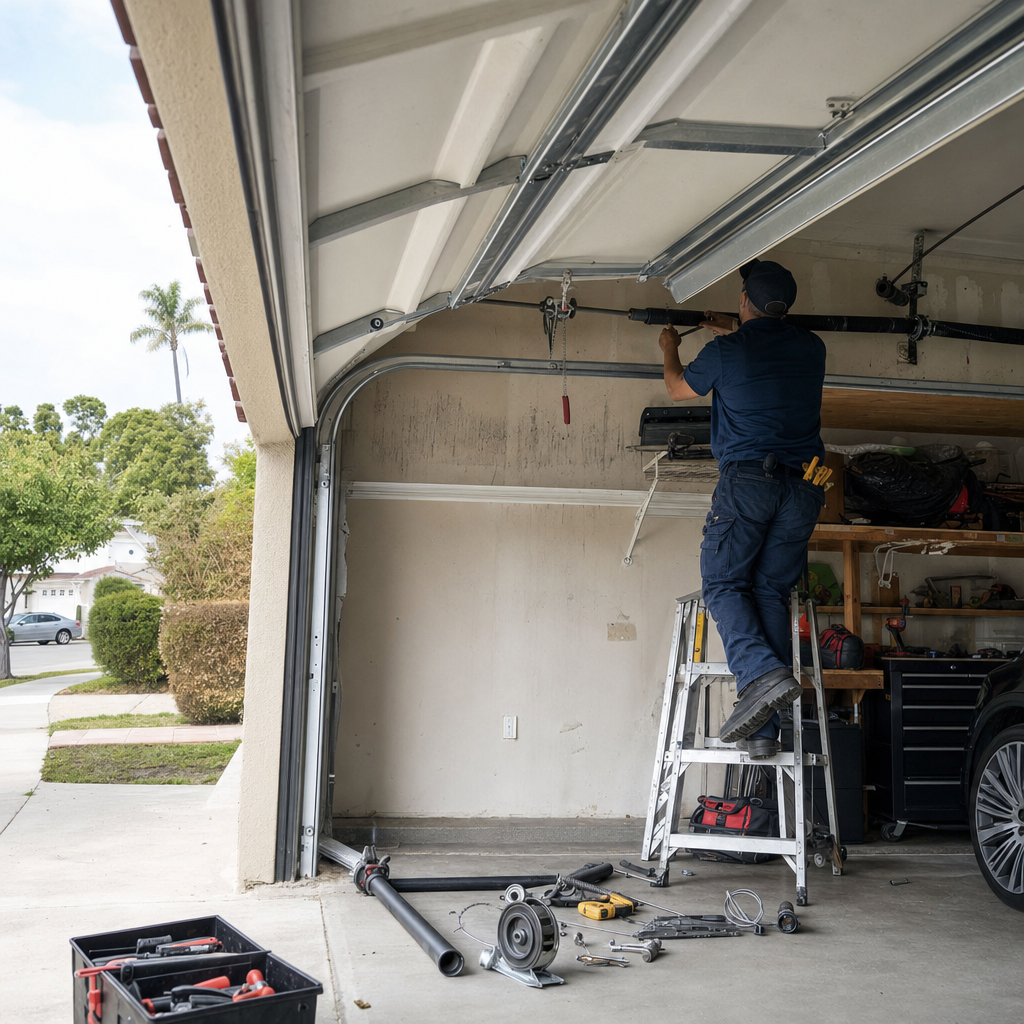
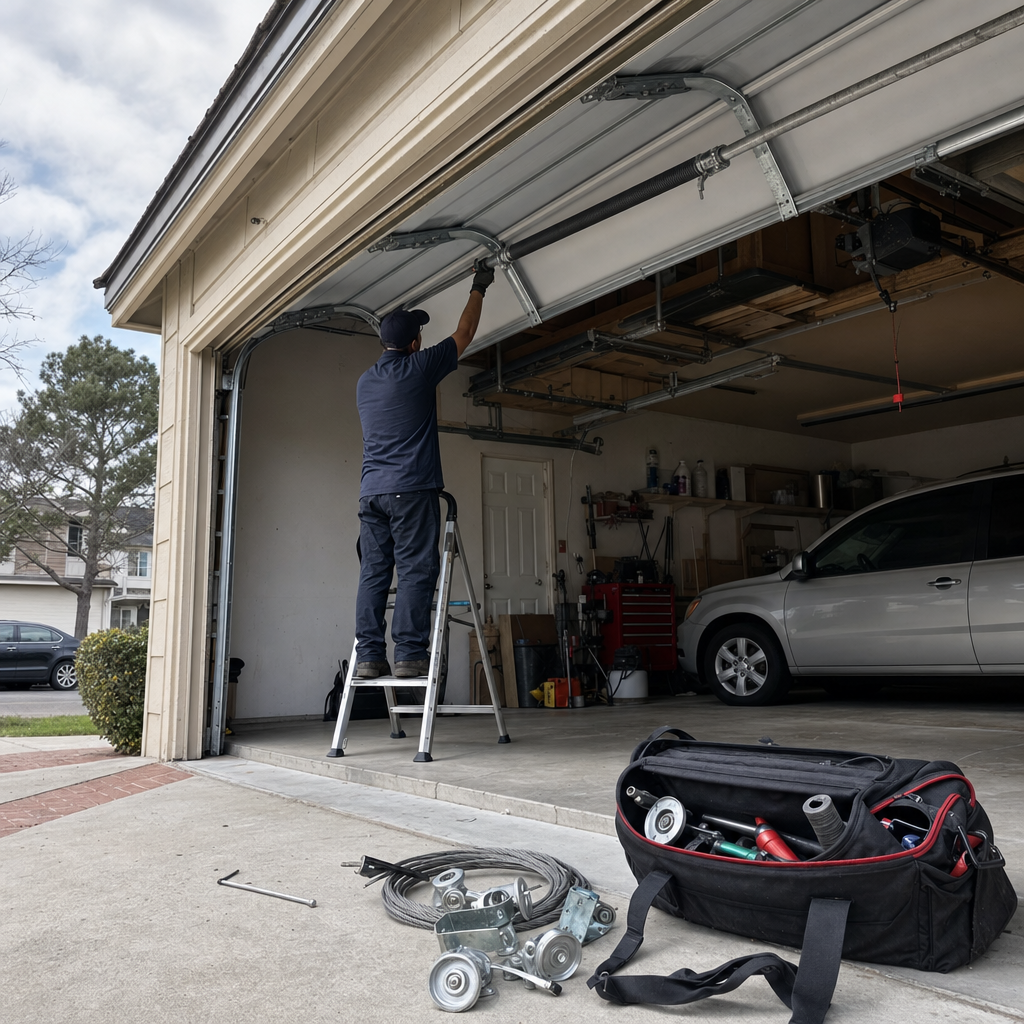
- Torsion spring adjustment or replacement: Springs store hundreds of foot-pounds of energy. Mishandling them causes severe injuries every year. This is the single most important line in this guide.
- Cable replacement or re-threading: Cables are under tension connected to the spring system. Releasing them without proper tools is dangerous.
- Track realignment: Requires the door to be in a controlled position throughout the process.
- Opener force and travel limit adjustment beyond basic settings: Incorrect force settings can damage the door or create a safety hazard.
- Bottom bracket removal: Bottom brackets are under full cable tension. Never unbolt them without a technician present.
Seasonal Timing: When to Do Which Checks in Santa Monica
Santa Monica doesn’t have the temperature extremes of other California markets, but it has something more corrosive: persistent marine layer humidity. The timing of your maintenance checks should align with the two environmental stress peaks of the local year.
Spring Check (March–April): Before May Gray Hits
Complete your full lubrication protocol and seal inspection before the May Gray/June Gloom condensation cycle begins in earnest. This is when moisture-driven corrosion accelerates. Inspect cable anchors and lower brackets closely — winter rain creates surface rust that the coming humidity will deepen if not addressed. If your door’s bottom seal has any hardening or cracking, replace it now before morning condensation begins pooling under the door again.
Fall Check (October): After Summer Heat Stress
Santa Monica summers push opener motors harder as thermal expansion tightens tracks slightly and increases operational resistance. In September and October, inspect roller condition for flat spots or bearing roughness that developed during heavy summer use. Check opener force settings — after a hot summer, some units drift out of calibration. Re-lubricate all spring and hinge points because summer heat burns off lubrication faster than the cooler months. If you have a Clopay, Amarr, or Wayne Dalton steel door, inspect panel paint for salt-air blistering along the bottom two panels, which are most exposed.
After Significant Weather Events
After any Santa Monica storm event — which can deliver high winds and sand-laden rain — do a quick visual inspection of track alignment, roller condition, and weatherstripping. Sand intrusion after a coastal storm can score rollers and tracks within a single day of operation.
Your Complete Step-by-Step Maintenance Checklist
Run through this checklist every six months. The sequence matters — start with the highest-failure-risk items while your attention is fresh.
- Inspect cable anchors and lower brackets — look for rust streaks, loose bolts, and frayed cable ends. Do not touch; observe only.
- Inspect lift cables along their full length — from drum to bottom bracket, look for kinking, fraying, or uneven coiling on the drums.
- Perform the door balance test — disconnect the opener, lift the door manually to waist height, and release. A balanced door stays in place. A door that falls or flies up has a spring tension problem requiring a technician.
- Inspect torsion spring(s) for visible corrosion or gaps in the coil — a gap in the coil means the spring has already broken. Do not operate the door.
- Lubricate springs, hinges, roller stems, and bearing plates — follow the protocol in the lubrication section above.
- Inspect and clean rollers — check for flat spots, cracked nylon, or bearing roughness. Cycle the door by hand and listen for grinding.
- Wipe down tracks — remove grit and debris with a dry cloth. Do not lubricate heavily.
- Test auto-reverse safety function — place a 2×4 flat on the ground in the door’s path and trigger the close cycle. The door must reverse upon contact. If it doesn’t, stop using the opener until this is corrected.
- Clean and align photo-eye sensors — wipe lenses with a dry cloth and check that both indicator lights are solid (not blinking).
- Inspect all weatherstripping — bottom seal, side seals, and top seal. Look for cracking, compression set, or gaps where light is visible.
- Check all visible hardware for tightness — hinge bolts, track mounting bolts, and opener mounting hardware. Tighten any that are loose.
- Test wall button and all remotes — confirm all activation points work. Weak signal from a remote is an early battery indicator.
- Inspect door panel surfaces — on steel doors, look for paint blistering or rust spots along the bottom panels. Treat early with a rust converter before repainting.
- Check opener light bulbs — vibration from daily operation burns out standard bulbs faster than expected. Use bulbs rated for garage door opener use.
How to Document Your Door’s Condition for Home Sales and Insurance
This is the checklist section that most guides skip entirely — and it’s one of the most practical things we can share with Santa Monica homeowners, where real estate transactions happen at high value and high scrutiny.
For Home Sales
Santa Monica real estate inspectors flag garage door issues consistently. A door that fails the inspector’s balance test or auto-reverse test can delay a sale or invite a price reduction request far larger than the actual repair cost. If you’re planning to sell within 12 months, complete this checklist and keep a simple dated log. Take photos of the springs, cables, and opener motor plate showing the model and installation date. A documented maintenance history signals to buyers and inspectors that the door has been cared for — the same way a service record adds value to a used car. If the door needs Garage Door Repair in Santa Monica to pass inspection, getting it done before listing is almost always the better financial decision.
For Insurance Claims
If your garage door is damaged in a break-in, vehicle impact, or storm event, an insurer will ask about prior condition. Dated photos and a maintenance log establish that the door was in good working order before the incident, which supports your claim and prevents disputes about pre-existing damage. After any Santa Monica wind event strong enough to blow debris into garage doors — which does happen during Santa Ana conditions — photograph any damage the same day before touching the door.
What to Record
- Door brand and model (found on the door’s label, usually inside a top panel)
- Opener brand, model, and installation year (label on the motor head — LiftMaster, Chamberlain, Genie, Craftsman, and Raynor all carry this prominently)
- Spring type and any replacement date if known
- Date of each maintenance check and what was done
- Name of any technician who performed repairs, with their company and contact information
- Photos of spring(s), cable condition, and weatherstripping taken at each check
Common Mistakes to Avoid
- Using WD-40 as a garage door lubricant. It’s a solvent and water displacer, not a lasting lubricant — in Santa Monica’s coastal air it evaporates quickly and leaves components drier than before. Use white lithium grease for metal-to-metal contact points instead.
- Ignoring the door balance test because the opener still works. An opener motor will compensate for an unbalanced door right up until it burns out the motor. In our experience, many opener replacements in Santa Monica are caused by undetected spring tension loss — not a failed opener.
- Skipping weatherstripping replacement because there’s “no visible leak.” Degraded seals allow salt-air humidity to reach cable hardware and spring components before water ever pools on the floor. Replace seals on a schedule, not just when you see water.
- Attempting to adjust or replace torsion springs yourself. Every year, homeowners are seriously injured by torsion spring failures during DIY attempts. The energy stored in a loaded torsion spring is not intuitive from appearance alone. This is not a cost-saving opportunity worth taking.
- Over-lubricating the tracks. Heavy grease on tracks collects the fine coastal sand common in Santa Monica neighborhoods near the beach and turns it into an abrasive compound. A light wipe is correct; a heavy coating causes accelerated roller and track wear.
- Waiting for a symptom before performing maintenance. Most expensive garage door failures in Santa Monica announce themselves with no warning. A cable that looks serviceable can fail overnight. A spring near end-of-life sounds and performs normally until it snaps. The checklist exists precisely because there are no reliable warning signs for the most common failures.
- Assuming a new door doesn’t need maintenance. New Clopay, Amarr, or Wayne Dalton installations still need their first lubrication service within six months in a coastal environment. Factory lubricants thin out faster in salt air, and new hardware needs its first torque check after the door settles into regular operation.
When to Call a Professional
Call a technician immediately — don’t operate the door — if you notice any of the following: a gap or kink in your torsion spring coil, a frayed or kinked lift cable, a door that won’t stay at waist height when released from the opener, grinding or scraping sounds from the tracks, a door that won’t fully close or reverse unexpectedly, or a bottom bracket with a visibly loose or missing bolt. These aren’t “monitor it” situations. Each one can progress to a full system failure within a single day of operation, and operating a compromised door accelerates damage to components that were otherwise fine.
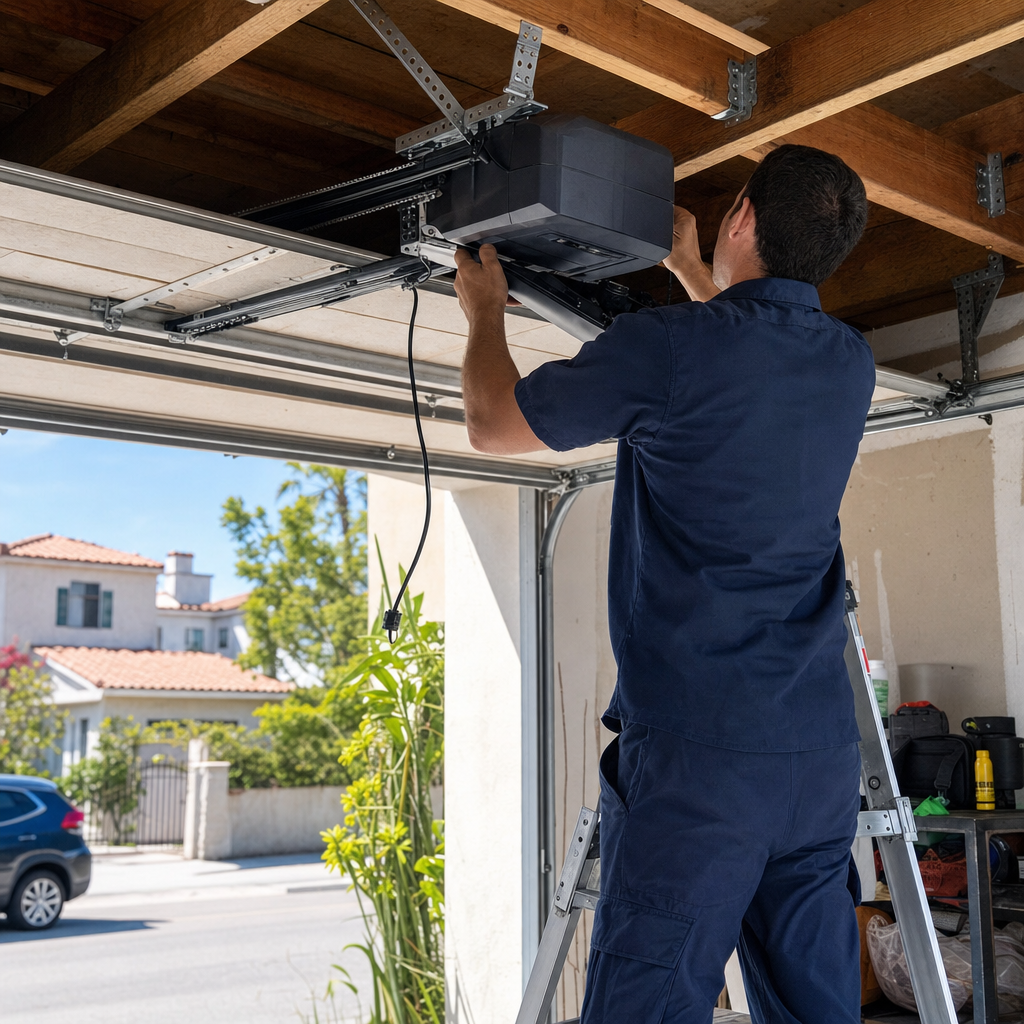
For a professional eye on any of these issues, Priority Garage Door Solutions Santa Monica offers free estimates in Santa Monica. Matthew Anderson personally handles the diagnosis — you’ll get a straight answer on what needs to be done and what can wait. Call (844) 460-7214 to schedule, or reach out when it can’t wait and we’ll make emergency response a priority.
Frequently Asked Questions
How often should I lubricate my garage door in Santa Monica?
Every six months is the correct interval for Santa Monica homeowners — more frequently than the standard annual recommendation because of the coastal salt-air environment. If your garage faces the ocean or is within a mile of the waterfront in areas like North Beach or the Marina, consider lubricating hinges, springs, and roller stems every four months during the wet season. The marine layer deposits corrosive salt moisture on metal surfaces nightly, which accelerates the breakdown of lubrication films faster than inland climates.
What’s the best garage door lubricant for coastal California?
White lithium grease in aerosol form is the best choice for metal-to-metal contact points like springs, hinges, and roller stems in coastal California. It provides a thick, moisture-displacing film that resists salt-air degradation better than light oils or penetrating sprays. For rubber weatherstripping and seals, use silicone spray — never petroleum-based products, which accelerate rubber cracking. Avoid WD-40 as a primary lubricant; it’s designed as a water displacer and evaporates too quickly in coastal humidity to provide lasting protection.
How do I know if my garage door springs need replacement in Santa Monica?
The most reliable indicator is age: if your torsion spring is over seven years old and your household uses the door three or more times per day, it’s approaching end-of-life even if it looks intact. A visible gap in the spring coil means it has already broken — stop using the door immediately. A door that falls when released manually at waist height (with the opener disconnected) indicates spring tension loss requiring professional adjustment. Santa Monica’s temperature cycling between cool marine layer nights and warm afternoons accelerates spring fatigue beyond standard cycle-count ratings.
Can I do garage door maintenance myself, or do I need a professional?
Most of the inspection, lubrication, and safety testing in this checklist is safely performed by any homeowner. Visual inspection of cables and brackets, applying lubricant to hinges and roller stems, cleaning tracks, testing the auto-reverse function, and inspecting weatherstripping are all homeowner-appropriate tasks. Torsion spring adjustment or replacement, cable replacement, track realignment, and bottom bracket work require a trained technician — these components are under extreme mechanical tension and cause serious injuries when mishandled by someone without proper tools and training.
How much does a typical garage door service call cost in Santa Monica?
In the Santa Monica market, a standard maintenance service visit typically runs $80–$150 depending on scope and parts needed. Spring replacement ranges from $175–$350 for a single spring and $300–$550 for a double-spring system, depending on the spring rating and door weight. Cable replacement generally runs $150–$250 per cable including labor. Emergency service calls — after-hours or same-day — carry a premium over standard rates in the local market. Consistent six-month maintenance is the most cost-effective approach because catching corrosion and wear early avoids the compounded costs of system failures that damage multiple components at once.
When is the best time of year to schedule garage door maintenance in Santa Monica?
The two ideal maintenance windows for Santa Monica homeowners are March through early April — before the May Gray and June Gloom condensation season begins — and October, after summer heat stress has peaked and before the winter rain season starts. The spring check catches winter corrosion and prepares seals and hardware for the high-humidity coastal months ahead. The fall check addresses wear from summer heat cycling and prepares the door for winter moisture. If you can only do one check per year, the spring window is more critical given how aggressively the May–July marine layer affects unlubricated coastal hardware. For a Garage Door Opener in Santa Monica specifically, the fall check is particularly valuable for calibrating force and travel settings after a summer of thermal expansion stress.
The Bottom Line
After nearly two decades of service calls across Santa Monica, the consistent finding is that most expensive repairs are preventable. Cable anchor corrosion, spring fatigue, and weatherstripping failure — the top three causes of local service calls — are all detectable months before they become emergencies if you know what to look for and when to look. Run this checklist every six months, time it to the local climate calendar, use the right products for a coastal environment, and keep a simple log. The door that gets regular attention is the door that doesn’t fail at 7 a.m. on a workday. Over 1,100 Santa Monica neighbors have trusted Matthew and the team at Priority Garage Door Solutions to handle what maintenance can’t prevent — we’re here when you need a straight answer or a fast fix. To schedule a Garage Door Installation in Santa Monica or any repair service, call (844) 460-7214.
Written by the team at Priority Garage Door Solutions Santa Monica, serving Santa Monica since 2008.